

Where You’ll See Payment Is Due
On the Schedule
When you open a visit on the schedule by clicking the pencil icon, you’ll see two amounts:- Collect — what to collect for today’s visit (the copay or coinsurance)
- Balance — the patient’s total outstanding account balance across all dates of service
On the Patient’s Case
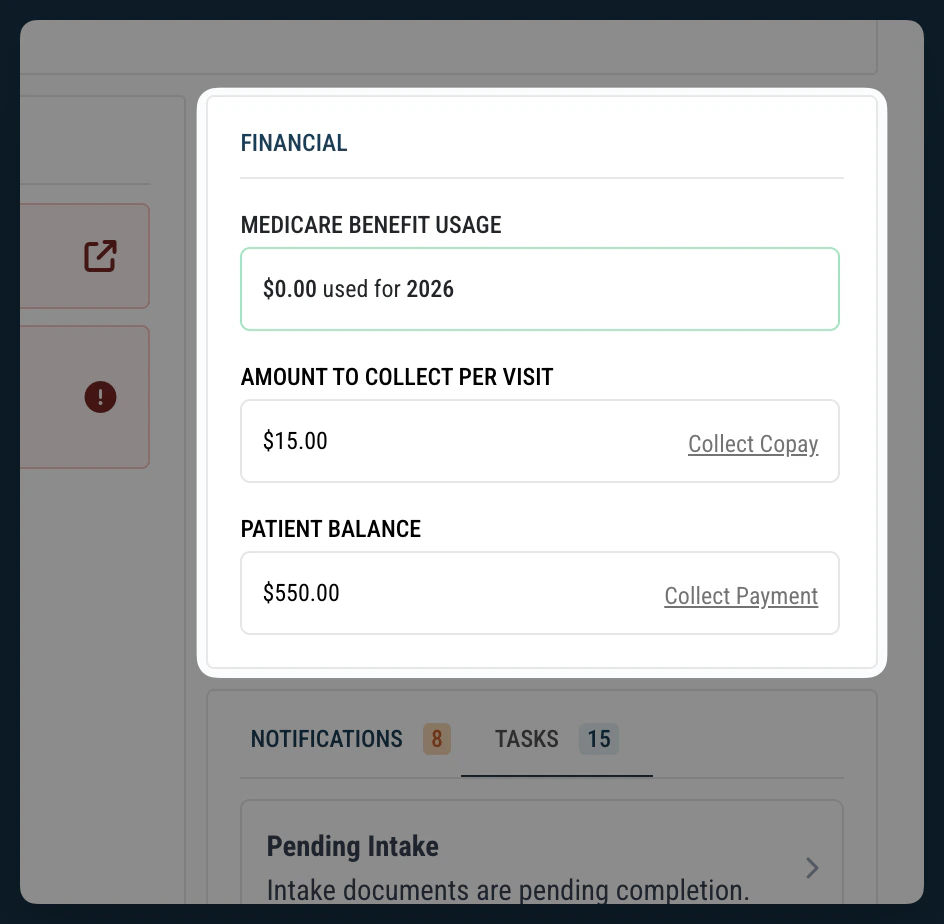
When you’re inside a patient’s case, the Financial card in the right sidebar shows the same two figures:- Amount to Collect Per Visit with a Collect Copay link
- Patient Balance with a Collect Payment link
From the Financial Menu
From anywhere inside a patient’s case, you can hover over Financial in the patient menu bar and click Payments. This takes you to the same payment screen as the sidebar links.Collect a Payment via Authorize.net
Use this section if your practice processes card payments through the Authorize.net integration in StrataEMR.- Navigate to the payment screen using any of the paths above.
- In the Authorize.Net — Integrated Payment Processing section, confirm or enter the Payment Date and Service Date.
- Enter the Amount to collect.
- Add a Note if needed (optional).
- Set Related to Invoice to Yes if this payment is in response to a paper statement that StrataPT mailed to the patient. Otherwise leave it set to No.
- Click Add Credit Card.
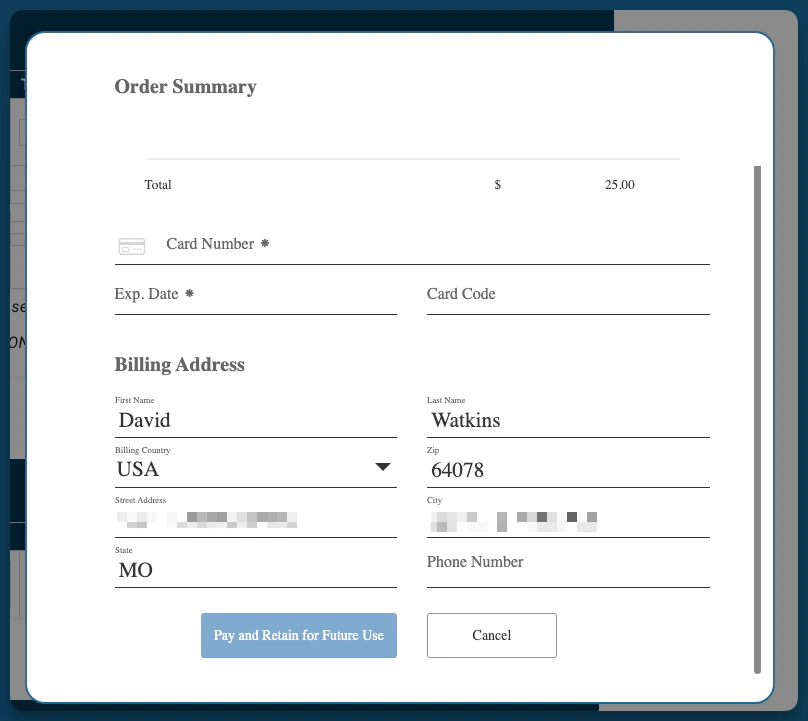
- In the Order Summary popup, confirm the total and enter the patient’s Card Number, Exp. Date, Card Code, and Billing Address.
- Click Pay and Retain for Future Use to process the payment.
Record a Manual Payment
Use this section for payments collected outside of Authorize.net — cash, check, or a card run through a separate terminal.- Navigate to the payment screen using any of the paths above.
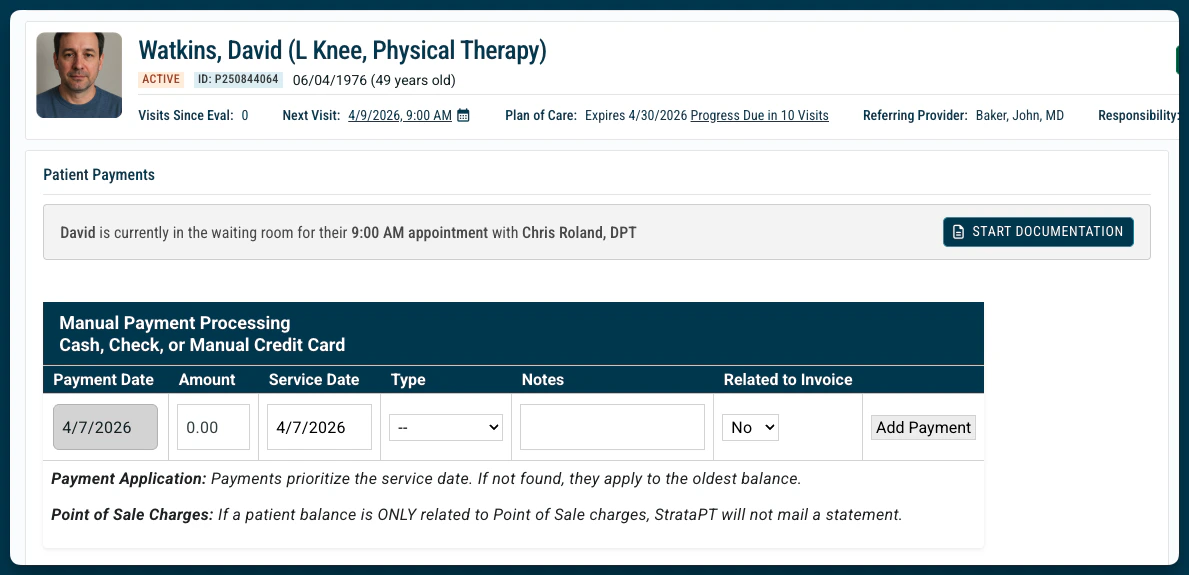
- In the Manual Payment Processing — Cash, Check, or Manual Credit Card section, confirm or enter the Payment Date and Service Date.
- Enter the Amount collected.
- Select the Type that matches how payment was collected:
- Cash
- Check
- Credit Card (for cards processed on a separate terminal)
- Other — if you select Other, describe the payment method in the Notes field
- Add a Note if needed. For checks, recording the check number here is good practice for reconciliation.
- Set Related to Invoice to Yes if this payment is in response to a mailed statement. Otherwise leave it set to No.
- Click Add Payment.
Note: Payments prioritize the service date you enter. If no matching service date is found, StrataEMR applies the payment to the oldest outstanding balance.
Note: If a patient’s balance consists entirely of Point of Sale charges, StrataPT will not mail a statement for it. Keep this in mind when deciding whether to set Related to Invoice to Yes.
Review Payment History
The Payment History section at the bottom of the payment screen shows all payments recorded for the patient — date, amount, service date, payment type, notes, and whether it was related to an invoice. You can edit or delete a payment record here if a correction is needed.Related
- How the Recommended Collection Amount Works — How StrataEMR estimates the copay and coinsurance amounts shown at check-in.
- Copay, Coinsurance, and Deductible — What each type of patient responsibility means and how it’s calculated.